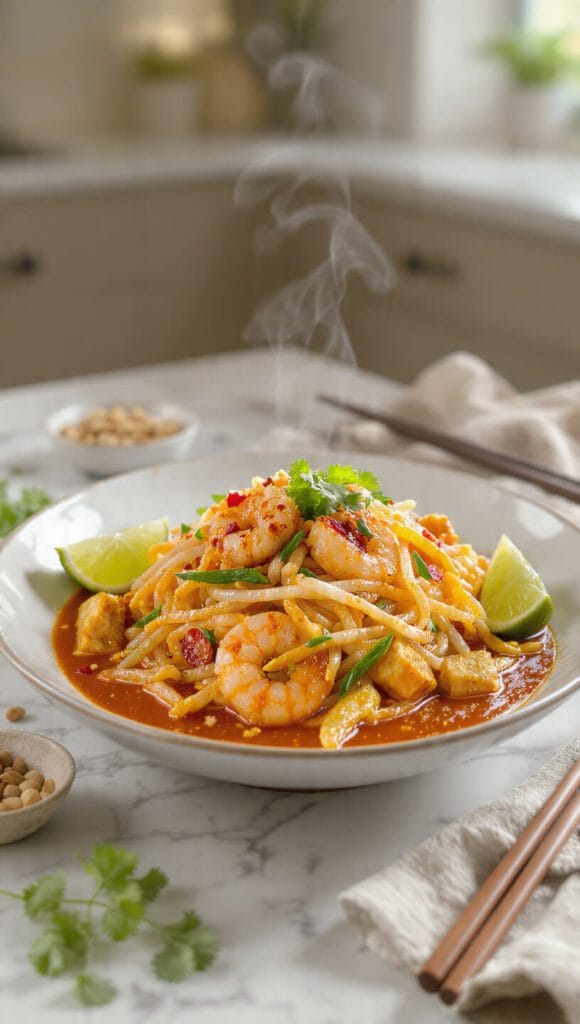
Servings 4
Serving Size 1 plate (about 14 oz / 400 g)
- Amount Per Serving
- % Daily Value *
- Total Fat 17g27%
- Saturated Fat 3g15%
- Cholesterol 155mg52%
- Sodium 1180mg50%
- Potassium 520mg15%
- Total Carbohydrate 58g20%
- Dietary Fiber 3g12%
- Sugars 12g
- Protein 32g64%
* Percent Daily Values are based on a 2,000 calorie diet. Your daily value may be higher or lower depending on your calorie needs.
Note
Chef Tips
- Use authentic tamarind paste for the best flavor.
- A carbon steel wok gives the best smoky "wok hei" flavor.
- Prep all ingredients before heating the wok, as cooking moves quickly.
Storage
Store leftovers in an airtight container for up to 3 days.
Refrigeration
Refrigerate promptly after cooling.
Freezing
Not recommended, as the noodles can become soft after thawing.
Reheating
Reheat gently in a skillet over medium heat with a splash of water.
Variations
- Chicken Pad Thai
- Tofu Pad Thai
- Vegetarian Pad Thai
- Extra-spicy Pad Thai
- Crab Pad Thai
Substitutions
- Chicken for shrimp
- Tamari for fish sauce (vegetarian version requires additional adjustments)
- Cashews instead of peanuts
Serving Suggestions
Serve with Thai iced tea, fresh spring rolls, cucumber salad, or mango sticky rice for dessert.
Make Ahead Tips
Prepare the sauce and chop the vegetables up to 24 hours in advance for faster cooking.
Common Mistakes
- Over-soaking the noodles
- Cooking on low heat
- Adding too much sauce
- Overcrowding the wok
- Overcooking the shrimp
- Skipping the fresh lime garnish
- Not preparing ingredients before starting
- Stir-frying too slowly
Keywords:
Pad Thai Recipe, Authentic Pad Thai, Thai Noodles, Stir Fry, Homemade Pad Thai, Thai Dinner, Rice Noodles
Nutrition Disclaimer: These values are estimates based on standard ingredient databases and may vary depending on the specific brands, ingredient substitutions, and portion sizes used.